
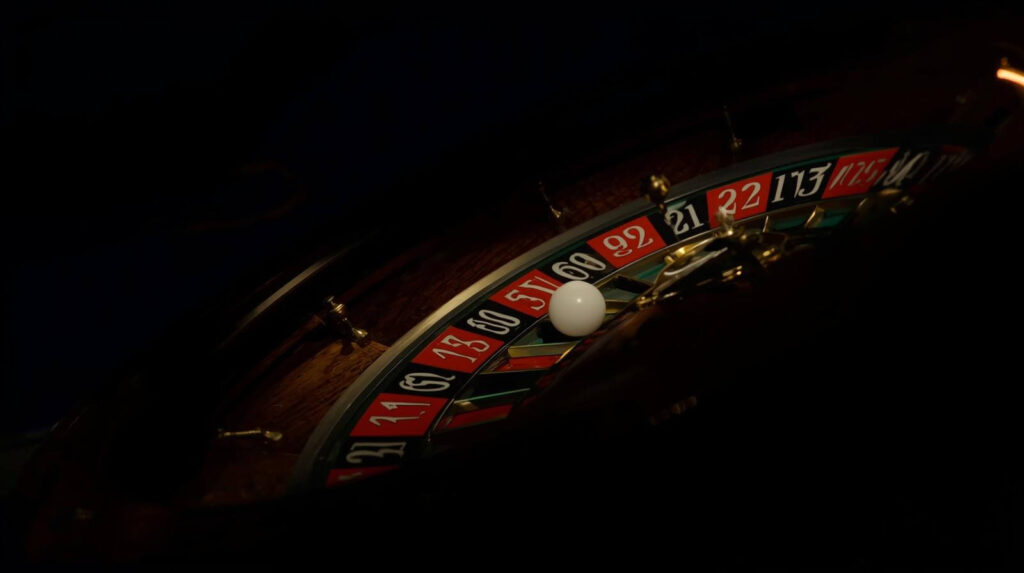
Roulette is a pure wheel-and-ball game with no skill component. The wheel layout and rules of your specific table determine the house edge, and your bet selection determines how that edge applies to you. European single-zero wheels are better than American double-zero ones; French wheels with la partage are the best of all. Beyond choosing the right table and avoiding the betting systems, there is nothing to “play” except your bankroll discipline.
What Roulette Actually Is
Roulette is one of the oldest casino games still played in its original form. A numbered wheel spins one direction; a small ball is dropped in the opposite direction; eventually the ball settles in one of the wheel’s pockets and that number wins. Players bet on where the ball will land, with payouts varying by how specific the bet was. A correctly predicted single number pays 35:1; a correctly predicted colour pays 1:1.
The game traces to 17th-century France, where mathematician Blaise Pascal accidentally invented an early version of the wheel while trying to design a perpetual motion machine. The modern single-zero layout came from the Blanc brothers in 1842, designed to attract players away from competing double-zero wheels in Germany and France. We cover the full lineage (Pascal, the Blancs, Monte Carlo, Joseph Jagger, the Eudaemons) in our history of roulette guide.
What makes roulette different from blackjack: there are no decisions to make once your bet is down. The wheel spins, the ball lands, the result is independent of every previous spin. The only decisions that matter happen before the spin: which table to sit at, which bets to place, and how much to wager. Get those right and you have done everything skill can do for you.
The Wheel: Three Versions, Different Math
Almost everything that matters about roulette begins with which wheel you are playing. Three variants dominate:
European Roulette. 37 numbered pockets: 1 through 36, plus a single zero. The standard wheel across Europe, most of Asia, and most online casinos. House edge of 2.70% on every bet.
American Roulette. 38 numbered pockets: 1 through 36, plus a zero AND a double zero. The standard wheel in US casinos. The added double zero doubles the house edge to 5.26% on most bets, and creates a uniquely bad single bet (the “Top Line”) at 7.89%.
French Roulette. Same single-zero wheel as European, but with two additional player-friendly rules: la partage (you lose only half your bet when the ball lands on zero, on even-money bets), or en prison (your bet is “imprisoned” for the next spin instead of lost). Either rule cuts the house edge on even-money bets from 2.70% down to 1.35%. The best version of the game available.
For the same time spent and same money wagered, French Roulette is roughly four times cheaper to play than American Roulette. The math is settled and unambiguous. If both are on offer, choose French. If only European is available, choose European. American is a worse bet under every circumstance and exists mostly because US casinos prioritise floor space and dealer training over giving players the best game. We compare the layouts and math in depth in our European vs American Roulette guide, and the en prison / la partage mechanics in our French Roulette guide.
How a Round Plays
Whether you are at a physical table or an online interface, the sequence is the same:
- Betting window opens. Players place chips on the table layout for whichever bets they want.
- Dealer announces “no more bets.” The window closes, no further chips can be placed or moved.
- Wheel spins, ball is launched. The wheel spins in one direction; the dealer launches the ball in the opposite direction along the wheel’s outer track.
- Ball settles. After several revolutions, the ball loses momentum, drops to the wheel itself, and eventually settles in one of the numbered pockets.
- Dealer marks the winning number. A small marker (sometimes called the “dolly”) is placed on the winning number on the table layout.
- Losing bets are swept; winning bets are paid. The dealer clears the losing chips first, then pays out the winners.
- Marker is removed, new betting window opens. Cycle repeats.
At a typical live table, a round takes 60 to 90 seconds. At Speed Roulette tables (live dealer studios optimised for fast play), rounds compress to around 25 seconds. Online RNG roulette can be even faster if you let it autoplay. Our full rules guide covers every detail of the round including the chip system, the marker conventions, and the timing rules.
The Bets and the Math
Roulette bets divide into two main categories: inside bets (on specific numbers or small groups) and outside bets (on larger categories like colours or odd/even). Inside bets pay more but hit less often. Outside bets pay less but hit nearly half the time. The house edge is the same for almost every bet on a given wheel.
| Bet | Numbers Covered | Payout | European Win % |
|---|---|---|---|
| Straight up | 1 number | 35:1 | 2.70% |
| Split | 2 adjacent numbers | 17:1 | 5.41% |
| Street | 3 numbers in a row | 11:1 | 8.11% |
| Corner | 4 numbers in a square | 8:1 | 10.81% |
| Six line | 6 numbers (two rows) | 5:1 | 16.22% |
| Column | 12 numbers (one column) | 2:1 | 32.43% |
| Dozen | 12 numbers (1-12, 13-24, or 25-36) | 2:1 | 32.43% |
| Red or Black | 18 numbers | 1:1 | 48.65% |
| Odd or Even | 18 numbers | 1:1 | 48.65% |
| High or Low | 18 numbers (1-18 or 19-36) | 1:1 | 48.65% |
The structure is elegant. Every bet has the same expected return (negative 2.70% in European, negative 5.26% in American), arrived at through different combinations of probability and payout. Betting on a single number wins 2.70% of the time and pays 35:1, which mathematically returns 97.30% of wagers. Betting on red wins 48.65% of the time and pays 1:1, which also returns 97.30% of wagers. The house edge is built into the payout odds being slightly worse than the true odds; that gap is the same percentage across the board.
The one exception is American Roulette’s “Top Line” bet (0, 00, 1, 2, 3 covered at 6:1), which carries a 7.89% house edge instead of 5.26%. Avoid it specifically. Every other bet on the table has the same edge as every other bet of the same type. Our bet types and payouts guide covers each bet in depth, including the “called bets” (Voisins du Zéro, Tiers du Cylindre, Orphelins) you will see at French and European tables.
“Strategy” in Roulette
There is no skill in roulette
Once you have chosen the table (European or French if available, never American) and decided which bets to place, every spin is independent random. No reading the wheel, no spotting patterns in past results, no betting progressions, no system, no insight changes the math. Every spin’s probabilities reset to the same values. The casino’s edge stays the same regardless of what happened last spin.
That said, three things you can do are not “strategy” but matter:
Pick the right table. A French Roulette table with la partage cuts your expected loss in half compared to American Roulette for the same bet. This is the single biggest decision in roulette and it happens before you place a chip.
Stick to outside bets if variance bothers you. Inside bets win infrequently with large payouts; outside bets win nearly half the time with small payouts. The house edge is the same, but the experience is different. Outside bets feel less swingy; inside bets feel more like a treasure hunt. Choose based on what kind of session you want.
Manage your bankroll. Bet small percentages of your session bankroll per spin, set a stop-loss and stop-win before sitting down, and walk away when you hit either. This is the same discipline that matters in every casino game, and in roulette it matters more than usual because the high variance can produce dramatic short-term swings. We cover all of it in our strategy guide.
Betting Systems Do Not Work
Every progressive betting system ever invented has been tried on roulette: Martingale (double after losses), D’Alembert (increase by one unit after losses), Fibonacci (follow the Fibonacci sequence), Labouchere (cross out numbers from a sequence), the James Bond strategy (specific bet pattern across multiple wagers), and dozens of others. None of them work.
The reason is mathematical. The wheel has no memory. Each spin is statistically independent of every previous spin. Multiplying your bet by any number, or adjusting it according to past results, does not change the probability of the next outcome. The negative expected value of each bet remains negative; rearranging the bet sizes over time does not flip the sign of the sum.
The reason systems persist is psychological. Martingale (and variants) produces lots of small wins punctuated by occasional catastrophic losses. The shape feels like winning right up until it does not. Casinos welcome system players because the systems require larger total wagering than flat betting, and the casino’s edge applies to total wagering. Players using Martingale lose money faster, not slower. Our betting systems guide covers each major system, the specific math of why it fails, and the bankroll-size threshold at which each system busts.
Live Roulette and Online Variants
Roulette adapted to online play earlier than most table games. RNG (digital) roulette has been a staple of online casinos since the 1990s; live dealer roulette took off in the 2010s and is now the dominant format for serious players.
Live dealer roulette uses a real wheel, real ball, real dealer, streamed from a professional studio. The mechanics, math, and rules are identical to physical casino play; what differs is presentation. Evolution Gaming, Pragmatic Live, and Playtech run most of the live roulette you will encounter from Malaysia. Our live roulette guide covers the studios, the popular formats (Speed, Auto, Immersive), and the practical considerations.
Lightning Roulette deserves its own mention because it has become one of the most popular live products in the casino industry. Evolution Gaming’s variant adds 1 to 5 randomly selected “lucky numbers” per round, with payouts of 50x, 100x, 200x, 300x, or 500x for landing on a lucky number with a straight-up bet. The base bets have a higher house edge (2.94% instead of 2.70%) to fund the bonuses, so the expected value is roughly the same; the variance is much higher and the gameplay is more exciting. We cover Lightning Roulette and its math in detail in our Lightning Roulette guide.
Beyond those, many roulette variants have emerged: Mini Roulette (12 numbers plus zero, smaller wheel), Multi-Wheel Roulette (one spin, multiple wheels simultaneously), Double Ball Roulette (two balls per spin), Pinball Roulette, and others. Most are gimmicks rather than meaningfully different games, but they have their fans and some have legitimate strategic implications.
Advantage Play: Mostly Historical
Unlike blackjack, roulette has no widely available skill-based edge. Card counting has no analogue here (every spin is independent; there is nothing to track). The advantage play that did exist in roulette’s history fell into three categories, all mostly closed off now:
Biased wheels. Mechanical wheels can wear unevenly over years of use, producing slight statistical bias toward certain numbers or sections. Joseph Jagger famously exploited this at Monte Carlo in 1873, winning roughly £65,000 (around £8 million in today’s money) over several sessions. Modern wheels are precision-engineered and rotated regularly between tables, and casinos analyse outcome data automatically for bias signs. Practical biased-wheel exploitation is essentially extinct.
Computer-aided prediction. In the late 1970s, a group of physics graduate students at UC Santa Cruz (the “Eudaemons,” led by Doyne Farmer) built a shoe-computer that could observe a roulette wheel’s initial conditions and predict where the ball would land with enough accuracy to beat the house. The technique worked but was illegal in most jurisdictions (electronic devices to predict gambling outcomes are banned almost everywhere), and modern casinos use protective measures (mid-spin call adjustments, wheel-camera analysis) that defeat it anyway.
Dealer signature. Some dealers, through habit or fatigue, develop consistent spin patterns that allow skilled observers to predict approximately where the ball will land. Real but very hard to identify, and casinos rotate dealers specifically to defeat this. Mostly a theoretical category now.
For practical roulette today, treat the game as a pure probability game with no available edge. The full history (Jagger, the Eudaemons, Garcia-Pelayo, and others) is in our advantage play guide; the cultural context is in our history guide.
Etiquette and Practical Notes
Live roulette has lighter etiquette demands than blackjack. There are no hand signals (you place chips on the layout yourself), no decisions during play (your bet is set before the spin), and no other players’ choices that affect your outcome. The main conventions:
- Use the colour chips, not value chips. Live roulette tables issue each player their own colour of chip at a denomination they choose. This avoids confusion about whose bets are whose. Cash chips from other games are not used for table bets directly.
- Wait for “no more bets” to settle. You can place and move chips while the wheel is spinning, right up until the dealer waves them off. Trying to bet after that point gets your hand swatted away (literally, at some tables) and your bet voided.
- Do not touch your bet after “no more bets.” Even adjusting your own chips after the call can be ruled cheating. Hands off until the result is settled.
- Do not lean across other players’ bets. Reach to your own area; ask the dealer for help if your target is too far to reach cleanly.
- Tipping (toking) is customary but optional. Throw a chip to the dealer occasionally as a “for you” bet, or tip when leaving after a winning session.
Online live roulette inherits these conventions through the interface (you click to place chips, the system enforces betting windows automatically, you cannot physically reach into other players’ bets). Online chat etiquette is the same as any live dealer game: polite, brief, not the dealer’s problem to coach you.
Frequently Asked Questions
Which roulette wheel should I look for?
French if available (la partage cuts even-money bet edges to 1.35%). European if French is not available (2.70% edge). Never American if you have any alternative (5.26% edge is almost double European). The wheel choice is the single biggest decision in roulette and you make it before placing any bets.
Are all bets on the same wheel equally good?
Almost. Every bet on a European or American wheel has the same house edge as every other bet on that wheel, with one exception: the American Roulette “Top Line” bet (0, 00, 1, 2, 3 at 6:1) has a 7.89% edge instead of 5.26%. Avoid the Top Line specifically; everything else is mathematically equivalent. Variance differs (inside bets are swingier than outside bets), but expected value is the same.
Does any betting system actually work?
No. Every progressive betting system invented has been mathematically demonstrated to maintain the same long-run expected value as flat betting. Systems redistribute variance (more frequent small wins followed by occasional large losses, in Martingale’s case) but cannot overcome the underlying house edge. They feel like winning during the small-win streak and devastate the bankroll during the eventual streak of losses. The math is settled; the systems are emotional, not mathematical.
Is the wheel really random, or are there patterns?
Modern regulated wheels are random within engineering tolerances. Wheel bias (slight mechanical preferences for certain numbers due to wear) used to exist on older wheels but is essentially extinct in modern casinos due to precision manufacturing, regular wheel rotation between tables, and automated bias monitoring. Online RNG roulette uses random number generators audited by independent bodies; live dealer wheels are the same wheels and same math as physical casino play.
Why is American Roulette popular if it is mathematically worse?
History and floor space. American casinos standardised on double-zero wheels in the 1800s and never switched; players accustomed to that wheel often do not realise the European option is better. Online operators sometimes default to American because of perceived player familiarity. Once you know the math, the choice is unambiguous: European or French is the better game by a wide margin.
Can you count cards or spot bias in modern roulette?
Card counting has no analogue in roulette; every spin is independent. Bias spotting was real historically but is essentially extinct now due to precision wheels, frequent rotation, and casino bias monitoring. Modern roulette has no available edge for skilled players; treat it as pure variance management. The advantage play history (Jagger, Eudaemons, Garcia-Pelayo) is fascinating but not a practical playbook today.
The Cluster, at a Glance
Everything else on roulette, organised:
- Start here if new: Rules, then Bet Types & Payouts, then Strategy.
- Choose the right wheel: European vs American and French Roulette (the best version of the game).
- Modern variants: Live Roulette, Lightning Roulette, and the rest.
- What does not work: Betting Systems.
- What used to work: Advantage Play and the history of roulette.
- Reference: Glossary.
Pick the right wheel, place sensible bets, ignore the systems, manage your bankroll. That is the entire game. When you are ready to play for ringgit, our best online roulette casinos for Malaysia page lists the operators we rate most highly, evaluated on wheel selection (do they carry French and European, not just American), live dealer quality, and MYR banking. The cluster guides above cover every other angle worth knowing.